 Question and Answer: How to Improve Your Memory
| Magazine Home I Links I Contact Us |
|
Home
Question and Answer: How to Improve Your Memory
|
Question and Answer: How to Improve Your Memory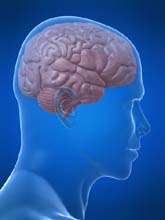
My memory is very poor. How can I improve my memory? Memory is the retention of information over time, and is usually divided into sensory register, short-term memory, working memory, long-term memory, visual memory and auditory memory. Roughly speaking, the sensory register concerns memories that last no more than about a second or two. If a line of print were flashed at you very rapidly, say, for one-tenth of a second, all the letters you can visualize for a brief moment after that presentation constitute the sensory register. Iconic memory refers to visual sensory memory, and echoic memory to auditory sensory memory. When you are trying to recall a telephone number that was heard a few seconds earlier, the name of a person who has just been introduced, or the substance of the remarks just made by a teacher in class, you are calling on short-term memory, or working memory. This lasts from a few seconds to a minute; the exact amount of time may vary somewhat. You need this kind of memory to retain ideas and thoughts as you work on problems. In writing a letter, for example, you must be able to keep the last sentence in mind as you compose the next. To solve an arithmetic problem like (3 X 3) + (4 X 2) in your head, you need to keep the intermediate results in mind (i.e., 3 X 3 = 9) to be able to solve the entire problem. The distinction between short-term memory and working memory is an ongoing debate. The terms are often used interchangeably. Many scholars, however, claim that some kind of manipulation of remembered information is needed in order to make the task a working memory task. According to Cowan, short-term memory refers to the passive storage of information when rehearsal is prevented with storage capacity around four items. When rehearsal is allowed and controlled attention is involved, it is a working memory task and the capacity is closer to seven items. Repeating digits in the same order they were presented would thus be a short-term memory task, while repeating them backwards would be a working memory task. Long-term memory lasts from a minute or so to weeks or even years. From long-term memory you can recall general information about the world that you learned on previous occasions, memory for specific past experiences, specific rules previously learned, and the like. Visual memory is a person’s ability to remember what he has seen, while auditory memory is a person’s ability to remember what he has heard. While visual memory deficiencies are inclined to affect reading and spelling, students with auditory memory deficiencies will often experience difficulty developing a good understanding of words, remembering terms and information that has been presented orally, for example, in history and science classes. Research has shown that, on average, within 24 hours one forgets 80% of what one has learned. Therefore it is no wonder that people are seeking ways to improve their memory skills. Human Memory Can Be Trained The Greeks, and later the Romans, developed some of the most prodigious memories the civilized world has ever seen. Memory was ranked as one of the most important disciplines of oratory, a flourishing art at the time. Speeches were committed to memory; lawyers depended on their memory in court; and poets, whose roles in society was paramount, regularly drew on their enormous powers of recall to recite long passages of verse. Your memory can be trained and developed too. Unfortunately, though, there is no magic wand. Things like sleep learning and dietary supplements have shown to have little or no impact. Like physical fitness can only be acquired through physical exercise, mental fitness can only be achieved through mental exercise. If a product promises significant cognitive improvements without much mental effort on your part, be suspicious! That is like saying you can improve your physical fitness without lifting a finger. Compublox Develops Human Memory Compublox contains a series of mental exercises, designed to develop, practice and improve a variety of cognitive skills, including memory — sensory register, short-term memory, working memory, long-term memory, visual memory and auditory memory. Since the Compublox exercises are automatically adapted to the intellectual level of the user, it is equally suitable for schoolchildren, students, business people, and the retired. Watch this sample exercise: |
 |
| Home A B C D E F G H I J K L M N O P Q R S T U V W X Y Z |